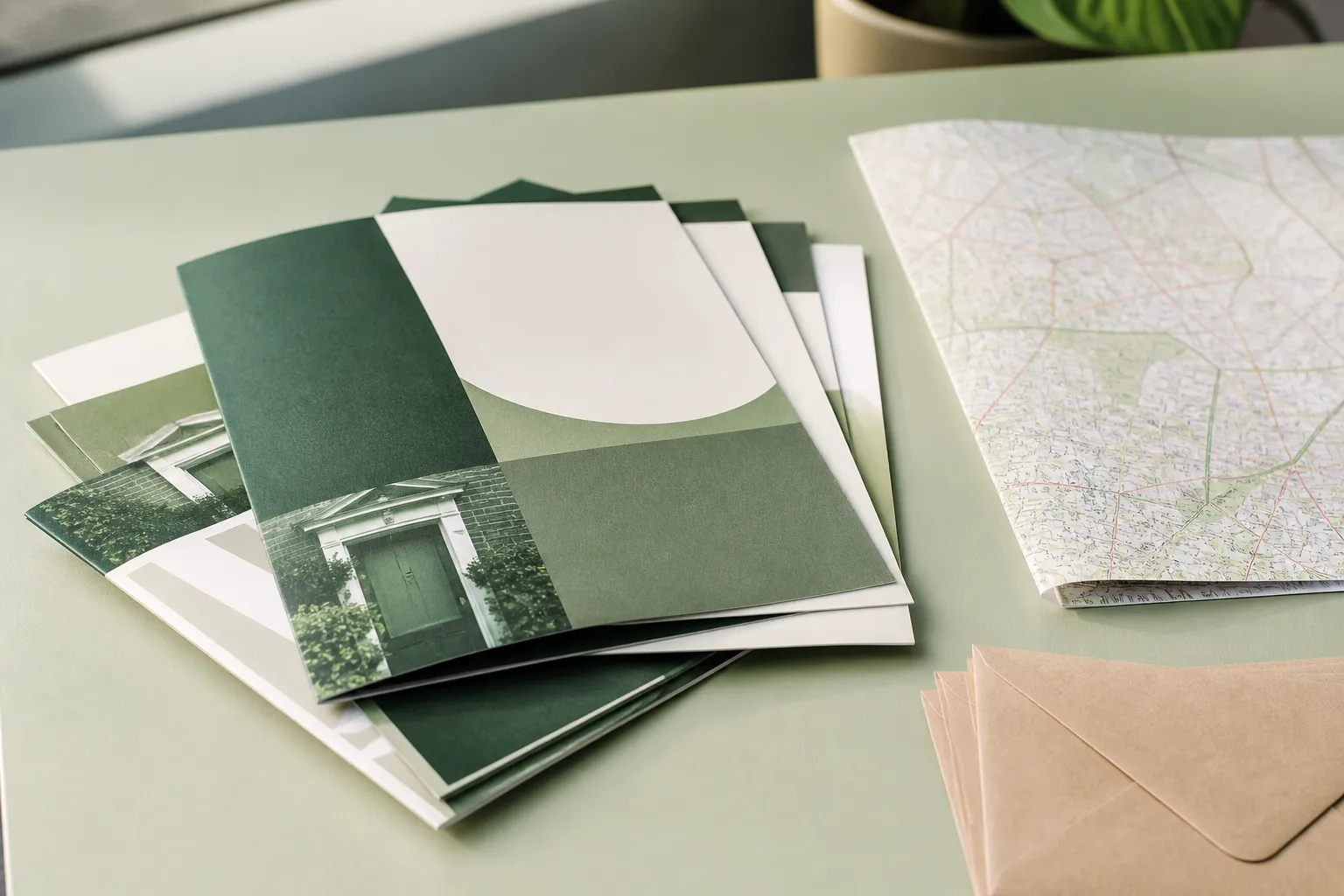
Door drops remain one of the most dependable ways to reach households and businesses. A printed message creates a physical moment of attention, free from crowded inboxes and changing social feeds. Used well, it can promote a service, drive a response or give residents the information they need.
What is door-drop marketing?
A door drop is a leaflet, letter, brochure, sample or magazine delivered through a letterbox without needing a named recipient. This makes it a flexible choice for commercial campaigns, resident notifications and public consultations alike.
Why door drops still work
- They are tangible: a recipient handles the message rather than scrolling past it.
- They offer broad local reach: whole neighbourhoods can be included without relying on a marketing list.
- They can be precisely targeted: routes can follow postcode sectors, wards, streets, estates or a radius around a site.
- They are visible: a well-designed physical item gives the message a clear chance to be noticed.
- They fit different budgets: the delivery approach can be selected to suit the campaign.
Plan before you print
Set a clear goal
Decide the action that matters most: awareness, website visits, an offer response, event attendance or a resident update. A single priority helps the creative and the distribution plan work together.
Define the area
Map the people the campaign needs to reach. Think beyond a simple radius: local boundaries, housing types, nearby transport routes, business districts and the real footprint of a proposed change can all inform a smarter area.
Allow enough time
Build in time for creative, approvals, print, delivery to the depot, distribution and any follow-up. A measured timetable avoids compromising the message or the audience selection.
Research and design for a quick read
Look at local demographics, competing activity and the offer or call to action that is most useful to the audience. Then make the item easy to understand in seconds.
- Use a headline that says exactly what is being offered or changed.
- Use images and a clear visual hierarchy to guide the eye.
- Keep branding consistent with the rest of the campaign.
- Make the next step unmistakable: a web address, QR code, phone number or event invitation.
- Use a professional print finish that reflects the quality of the organisation behind it.
- Use unique links, codes or landing pages where measurement matters.
Choose the right delivery method
Solus distribution
Your item is delivered on its own, giving it the recipient’s full attention. It is well suited to important notices, consultation communications and highly focused local activity.
Shared distribution
Your item is delivered with a small number of non-competing items. It can be a cost-effective option for continuing promotional campaigns.
Addressed mail and hybrid delivery
Secure-entry flats, rural properties and businesses may need an addressed approach. Combining solus, shared and addressed delivery can provide fuller coverage where one method alone would leave gaps.
Make targeting and tracking part of the plan
Accurate property data and mapping are the foundation of a dependable campaign. Once delivery is under way, GPS tracking, supervision and reports on inaccessible properties provide a record of what happened on the ground.
Good measurement starts before the first item is delivered. Decide how success will be recognised, then make that response traceable in the creative and campaign set-up.
Measure, learn and repeat
Use unique discount codes, dedicated landing pages, telephone numbers, response forms, postcode information and customer feedback to understand what the campaign achieved. Compare those signals with wider activity such as enquiries and web traffic around delivery dates.
One drop can create awareness, but repeated, well-timed messages often build stronger recognition. Test creative, offers and areas over time, then apply what the evidence tells you.
Common questions
How many leaflets should a first campaign include?
Can more than leaflets be delivered?
How can results be tracked?
Ready to plan your next door drop?
We can help with targeting, print, delivery and the information needed to assess a campaign afterwards.
Talk to our team