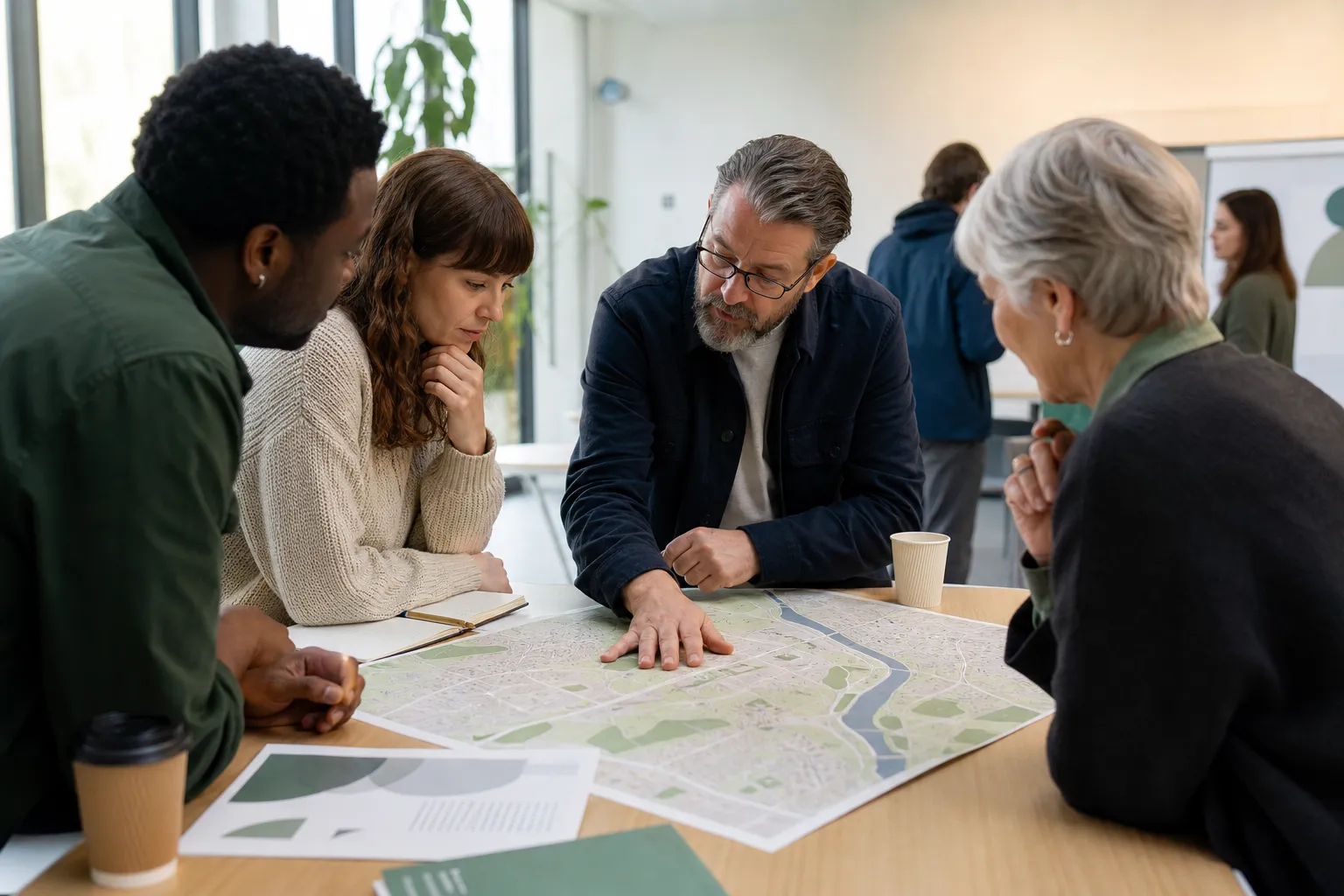
Successful consultations depend on communication that reaches people early enough to be useful. Whether the topic is a development, a change to local services or major infrastructure, clear information helps residents feel informed, respected and able to share their views.
What is a public consultation?
A consultation is a structured opportunity for residents, businesses and community groups to comment on a decision that may affect them. Some consultations are a legal requirement; others are voluntary exercises that demonstrate good practice. Both work best when they explain the proposal, invite meaningful feedback and show that participation matters.
Use more than one route to reach people
No channel reaches everyone. A strong plan may combine household letters or leaflets, local notices, newsletters, signage near an event, feedback forms, exhibitions, consultation websites and social posts. Direct print is especially important for people who are less likely to find information online.
Plan the consultation communications
1. Set the purpose
Be clear about whether the organisation needs to inform, consult or collaborate. Identify the decisions that genuinely need public input, and say what will happen with that input.
2. Know who may be affected
Map residents, businesses, commuters, local groups and other stakeholders. Consider language, accessibility, cultural needs and people who may have limited digital access. A careful audience plan is more useful than a blanket assumption about a neighbourhood.
3. Create a realistic timetable
Allow time for materials, approvals, print, delivery, events, feedback analysis and follow-up. Give people a reasonable window to consider the information, and avoid avoidable clashes with holidays or local events.
Make materials easy to use
- Write in plain English and avoid unnecessary legal or technical language.
- Use headings, short paragraphs, maps, timelines and diagrams to explain complex subjects.
- Explain the possible effects on everyday life with empathy and clarity.
- Offer more than one response route, such as an online form, freepost, phone number or event invitation.
- Consider translations, large-print versions and accessible digital formats where needed.
Match delivery to the audience
Solus distribution gives an important notice space to stand on its own. Shared distribution can support broader awareness activity. Addressed mail can reach locations with restricted access, while hybrid delivery combines approaches to reduce gaps. Whichever route is used, delivery reporting should be available to support transparency.
Map accurately and time carefully
The boundary should follow the likely impact, not simply the nearest postcodes. Accurate address data, local knowledge and mapping help a project include the right homes and businesses. Build in enough notice before key events and deadlines, then use follow-up messages to show how the process is progressing.
Anticipate common challenges
Hard-to-reach addresses
Flats with secure entry, gated homes and rural properties often need a different route. Combining unaddressed and addressed delivery can help the message reach beyond the easy addresses.
Consultation fatigue
People can disengage where communications feel repetitive. Make the purpose unmistakable, explain why this consultation is different and keep the material concise.
Controversial proposals
Never hide behind jargon. Acknowledge likely concerns, give reliable sources of detail and make the response process feel straightforward and fair.
Track delivery and report back
Live GPS monitoring, inaccessible-property reports and appropriate evidence for sensitive deliveries can create an auditable delivery trail. Once the consultation closes, analyse feedback, communicate what was heard and explain how the next decision has been shaped. Follow-up is a meaningful part of trust-building, not an afterthought.
People are more likely to participate when the message is clear about three things: what is proposed, how it may affect them and exactly how they can respond.
Support from planning to follow-up
Letterbox can support planning, design and print, targeted mapping, environmentally responsible distribution, delivery reporting and post-consultation communications.
Plan a consultation